
Criminal Court Cases in Union County
The Union County District Court is the local arm of Iowa's unified trial court. It handles felonies, indictable misdemeanors, simple misdemeanors routed into district court, and related proceedings. Iowa does not divide this work among Texas-style county criminal courts or justice courts. A case opened after the Union County Attorney files a charge belongs to the court file, even when a sheriff's deputy, Creston officer, Afton officer, or state trooper made the arrest.
The clerk is the official custodian. The office records the charging paper, court dates, pleas, motions, orders, judgment, sentence, and financial entries. An arrest-stage charge can change before filing, and a filed count can be amended or dismissed. For that reason, the Union County criminal court docket is the sound source for the case outcome. The broader court case file should be read apart from a booking entry.
Union County Court Records at Suite 6
Union County keeps two key record offices next door to each other, but their files are not interchangeable. The courthouse is at 300 N. Pine Street, while the sheriff and jail are at 302 N. Pine Street. Ask Suite 6 for a docket, judgment, filed charge, or certified court document. Ask the arresting agency for its incident narrative and the jail for booking details. Sending a request to the wrong door can add delay even though the buildings differ by one street number.
The official Union County clerk page shows the courthouse and lists the court office. The captured view below helps identify the local source for Union County criminal case records.
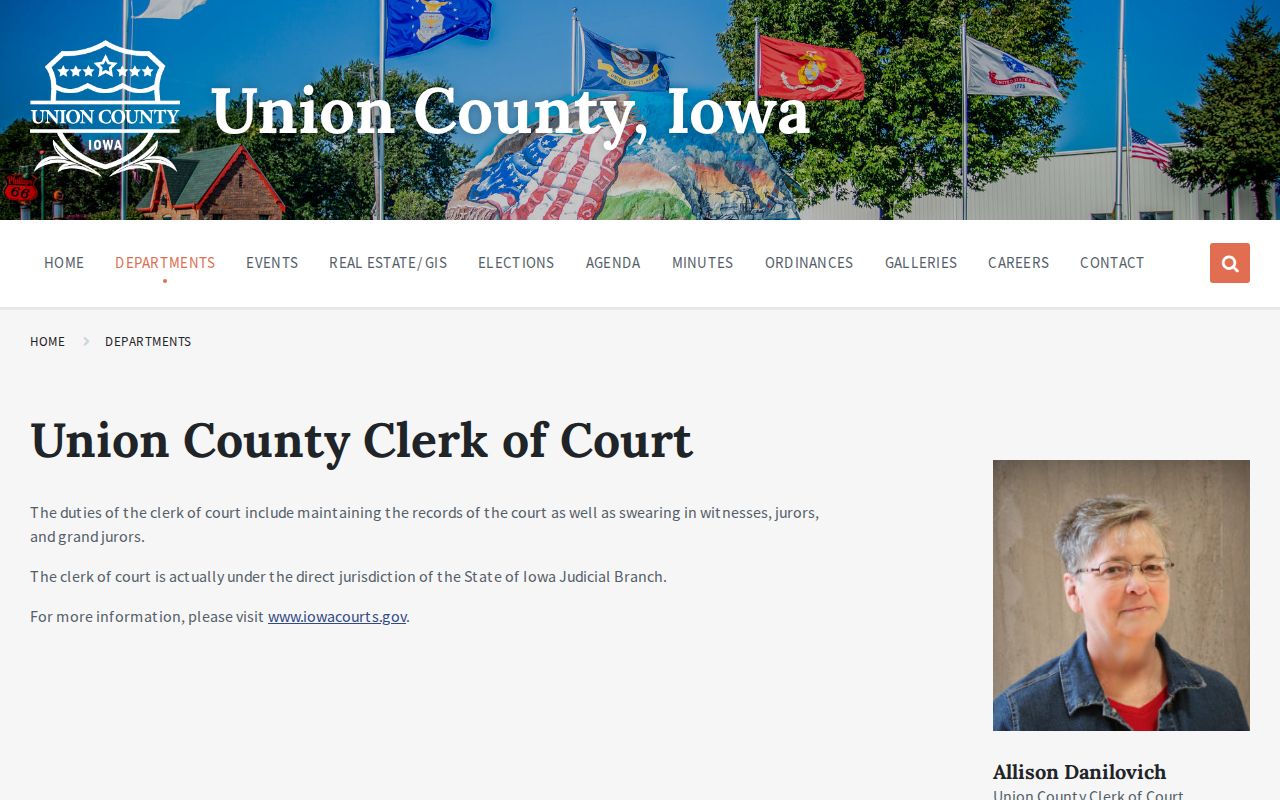
That office is open from 8:30 a.m. to 4:30 p.m. on weekdays. Call 641-782-7315 before a records visit, especially when an archived file or certified copy may need staff preparation.
Union County Case Record Searches
Iowa Courts Online is the first search channel for filed Union County criminal court cases. It is a statewide index, so choosing Union County helps avoid same-name results from elsewhere. The free view can identify a case and its public docket. A paid subscription and the public terminal at the clerk's office provide broader search or document-link access.
- Open Trial Court Case Search in Iowa Courts Online.
- Enter the exact Case ID when known. Otherwise, use at least two surname letters and add first or middle name.
- Select Union County and narrow to the criminal case type when that control is available.
- Open the Case ID and confirm the county, party role, filed date, charge, status, and docket chronology.
- Ask the Suite 6 clerk to inspect, copy, or certify any public document that cannot be opened online.
The official interface shown in the statewide case-search source is the correct portal for Union County court case records.
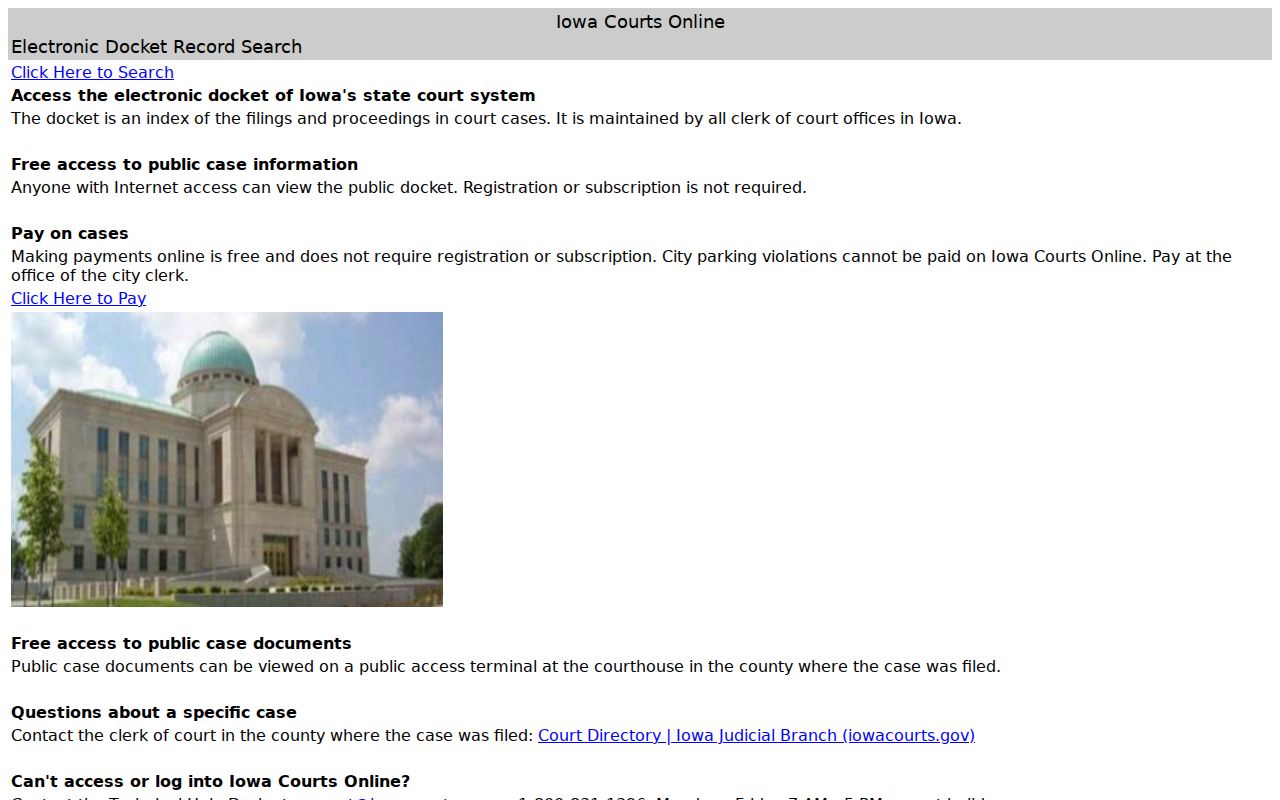
Use the displayed controls with care. A name match alone does not prove that the result concerns the intended person.
| Field | Type | Need | Union County Search Use |
|---|---|---|---|
| Last/Firm Name | Text | Required for name search | Enter at least two letters; the % wildcard is supported |
| First and Middle Name | Text | Optional | Narrows common names; omit a period after an initial |
| Case ID | Text | Alternative | Use the exact identifier when known |
| County | Dropdown | Recommended | Select Union for local court cases |
| Case Type | Dropdown | Optional | Narrow to criminal matters where offered |
| Party Combination | Control | Conditional | AND requires both names; OR accepts either |
Union County Terminal Access
A missing document link does not always mean the filing is closed. The Iowa Judicial Branch search guide explains that links without brackets may work only for paid subscribers or at a clerk's public terminal. The Suite 6 terminal can therefore be more useful than the free web view. Bring a case number when possible. For a name search, provide the full name and an approximate filing year, then ask staff whether the record is electronic, archived, sealed, or available for inspection.
The official Iowa Courts Online guide explains the difference between free, subscription, and clerk-terminal access. If an older Union County criminal case is absent online, the clerk can check whether staff retrieval is needed. Copy and certification fees were not fixed in the research, so ask for the current amount before ordering.
Note: The online docket identifies public events, but only the clerk can issue an official certified Union County court record.
What a Criminal Case File Contains
A Union County criminal case file tracks the accusation through the court's final action. Read the title, county, case type, filed date, and party role before relying on the result. Then read events in date order. “Open” means the matter is still pending, not that guilt has been found. “Disposed” means court action has ended at that stage, but it does not reveal whether the case ended in conviction, dismissal, or acquittal.
| Case ID and Court | The unique case reference, Union County, court type, subtype, filing date, and status. |
|---|---|
| Charging Document | The filed counts, offense text, statute, level, and alleged offense date. |
| Docket Entries | Dated complaints, motions, orders, notices, pleas, and other public events. |
| Hearings | Public event type, date, time, location, and judge when posted. |
| Disposition and Judgment | The outcome of each filed count and the judgment event. |
| Sentence and Costs | Custody, probation, fines, costs, restitution, and payment entries when public. |
| Warrant Events | Public failure-to-appear or warrant entries; sealed warrants will not appear. |
The Judicial Branch also maintains an official court forms library for filings used across Iowa.
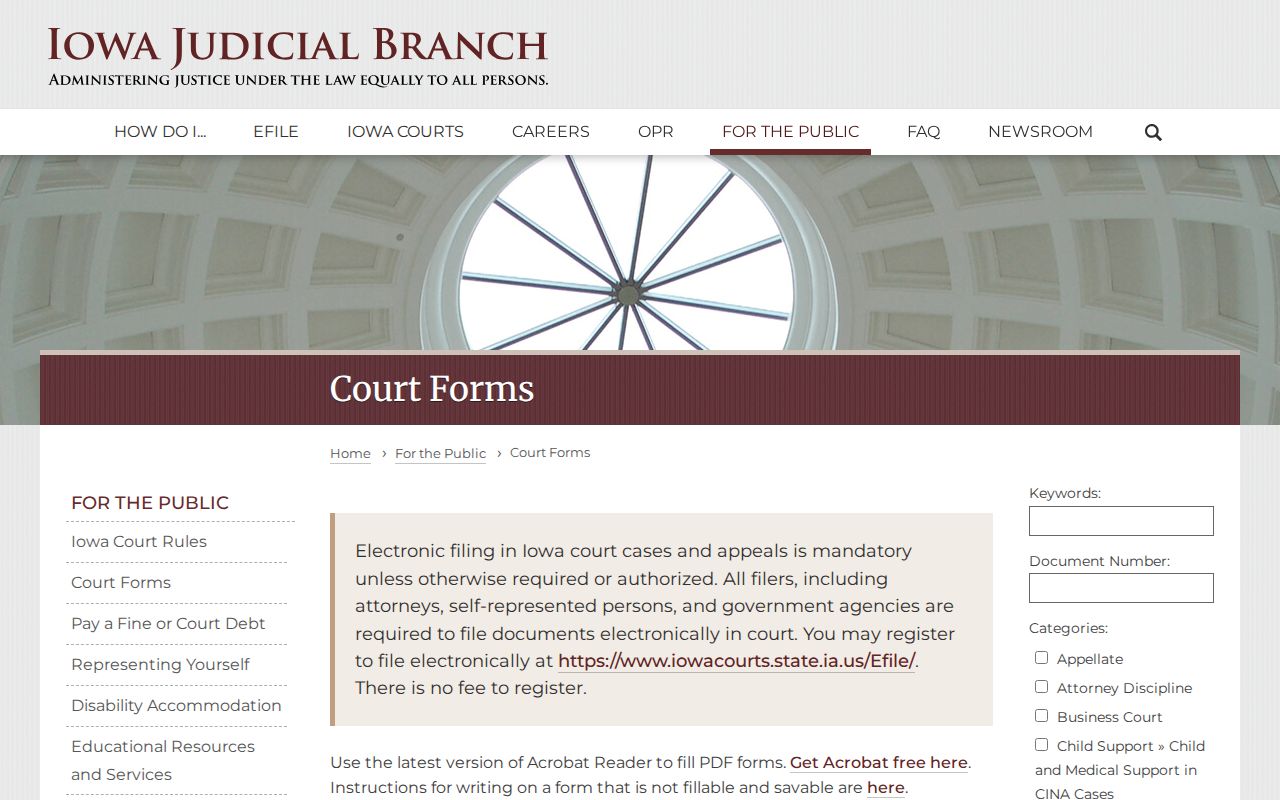
The forms source is useful when a Union County case requires an approved filing, but the clerk cannot give legal advice or choose a form for a party.
Reading Union County Criminal Dockets
Docket shorthand becomes clearer when each term is tied to a stage. A complaint states an accusation. An initial appearance brings the arrested person before a judicial officer. Trial information is a formal charging document used in Iowa indictable cases. A plea records the response to a charge, while a motion asks the court to act. Judgment and sentence state the court's result and penalty.
- Arraignment
- The court event at which a plea is entered to the filed charge.
- Disposition
- The result of a count, such as conviction, dismissal, or acquittal.
- Mittimus
- A court order directing custody or execution of a sentence.
- Revocation
- A later proceeding on an alleged breach of probation or another conditional status.
- Satisfaction
- An entry showing that a listed financial or court obligation has been met.
Each Union County docket is case-specific. Do not infer an outcome from one event label. Open the judgment or disposition entry when public, or ask the clerk for the filed document.
Criminal Case Stages in Union County
The court file begins when the prosecutor files a charge, not merely when an arrest occurs. The Union County Attorney reviews the officer's report and may file, change, or decline counts. The clerk then records each court step. Some cases end by dismissal or plea before trial. Others continue through motions and trial. Sentencing follows a guilty plea or finding of guilt, and later probation, warrant, appeal, or revocation events may extend the docket.
Case flow: Charges Filed › Arraignment › Pretrial › Plea or Trial › Disposition › Sentencing
A booking charge and a filed charge can differ without either record being false. They capture different points in the process. For arrest-stage facts, use the Union County arrest search; for the filed count and result, rely on the criminal court case.
Union County Docket or DCI Record
A docket is not an Iowa DCI rap sheet. Iowa Courts Online shows public trial-court events by case. The Iowa Department of Public Safety, Division of Criminal Investigation, builds a statewide criminal-history product from fingerprint-supported arrest cycles and reported dispositions. An event can appear in one system but not the other because fingerprints were not submitted, a disposition has not linked, information is restricted, or the court file has a different scope.
Use Union County court records to understand the complaint, hearings, pleas, orders, judgment, and sentence in a known case. Use the DCI process for a releasable Iowa repository record. Neither source is a nationwide FBI history. A person reviewing an apparent error should compare identifiers, the arrest cycle, and the signed court disposition before asking the responsible office to correct its own data.
Access Rules for Case Records
Iowa's public-access rules do not make every item downloadable. Iowa Code chapter 22 sets broad public-record principles, while Judicial Branch rules govern court-file access and protected information. Juvenile records may be confidential under section 232.147. Victim details, medical facts, personal identifiers, sealed warrants, and confidential filings can be withheld or redacted. A public judgment may remain available even when private data within related papers does not.
Expunged or sealed Union County criminal court cases are not available through ordinary public access. Iowa Code chapter 901C supplies routes for eligible dismissals, acquittals, and limited misdemeanor convictions, while section 907.9 addresses eligible deferred judgments after discharge. A dismissal alone does not erase each agency record. The court must apply the statute and enter the proper order.
Note: Public access can vary by document, even when the Union County case title and docket remain visible online.
Federal Cases Outside Union County Court
Federal prosecutions are outside Iowa Courts Online. Union County lies within the U.S. District Court for the Southern District of Iowa, and PACER is the official federal docket channel. It requires registration and uses the judiciary's current fee schedule. Federal files may include indictments, motions, orders, pleas, and sentencing papers, subject to sealing and redaction.
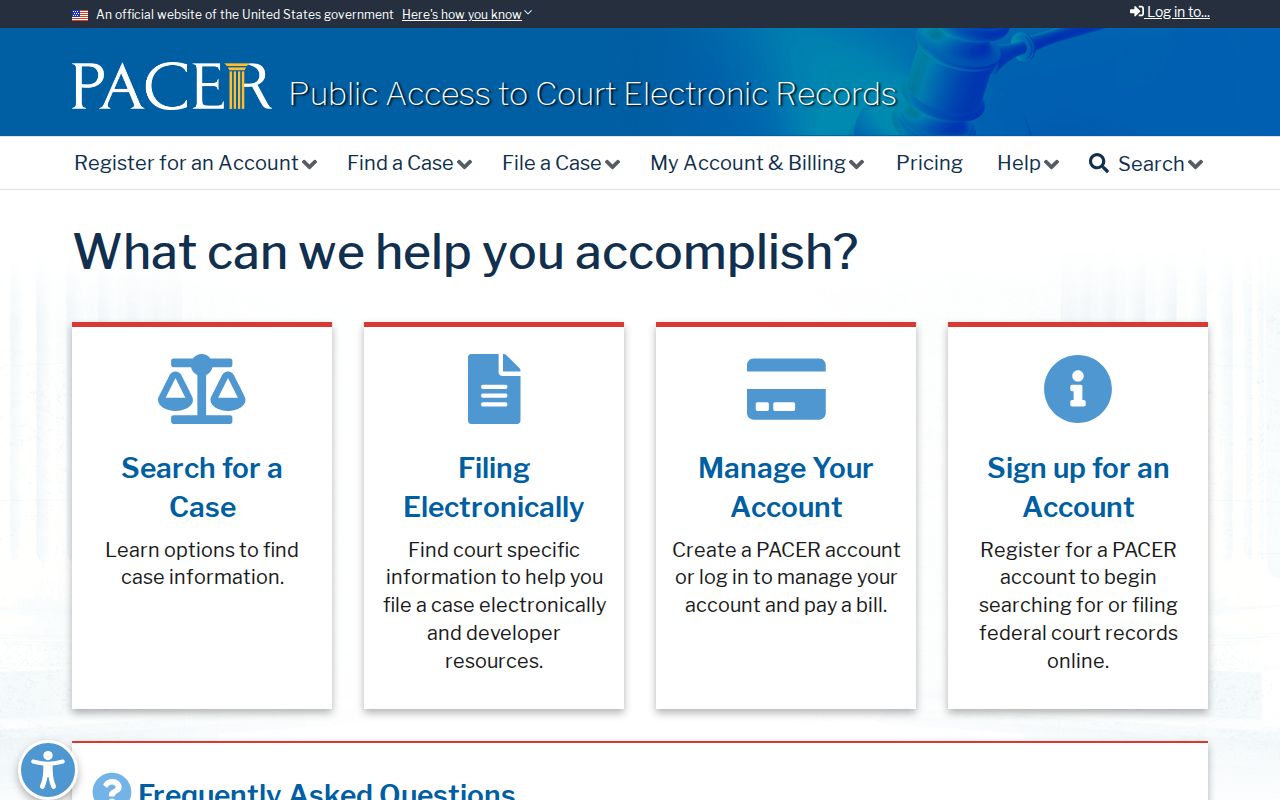
The PACER source marks the boundary between federal records and Union County District Court cases. The local clerk cannot supply a federal docket.
Custody follows the same split. The Federal Bureau of Prisons locator covers federal custody, not a person held only in the Union County Jail.
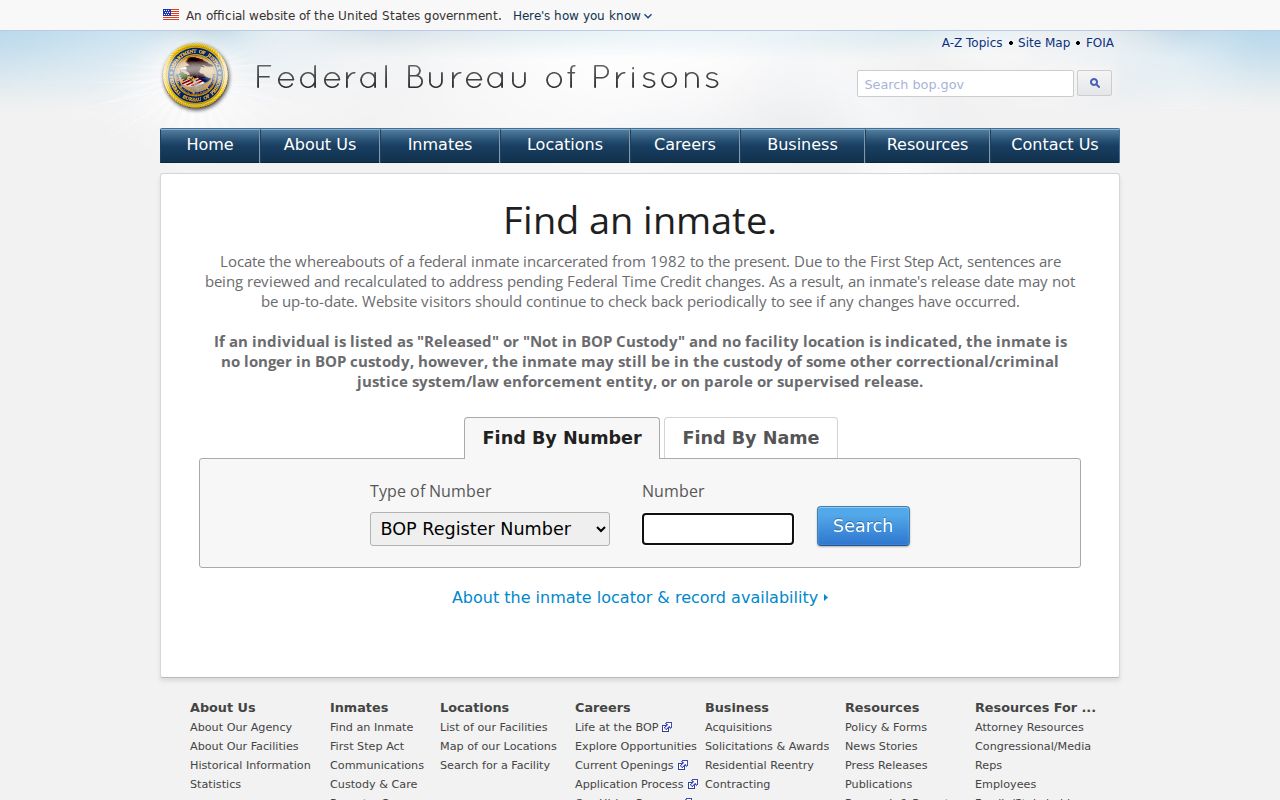
Use the federal locator only after confirming the case is federal. A state sentence or local pretrial hold belongs in Iowa or Union County custody channels.